
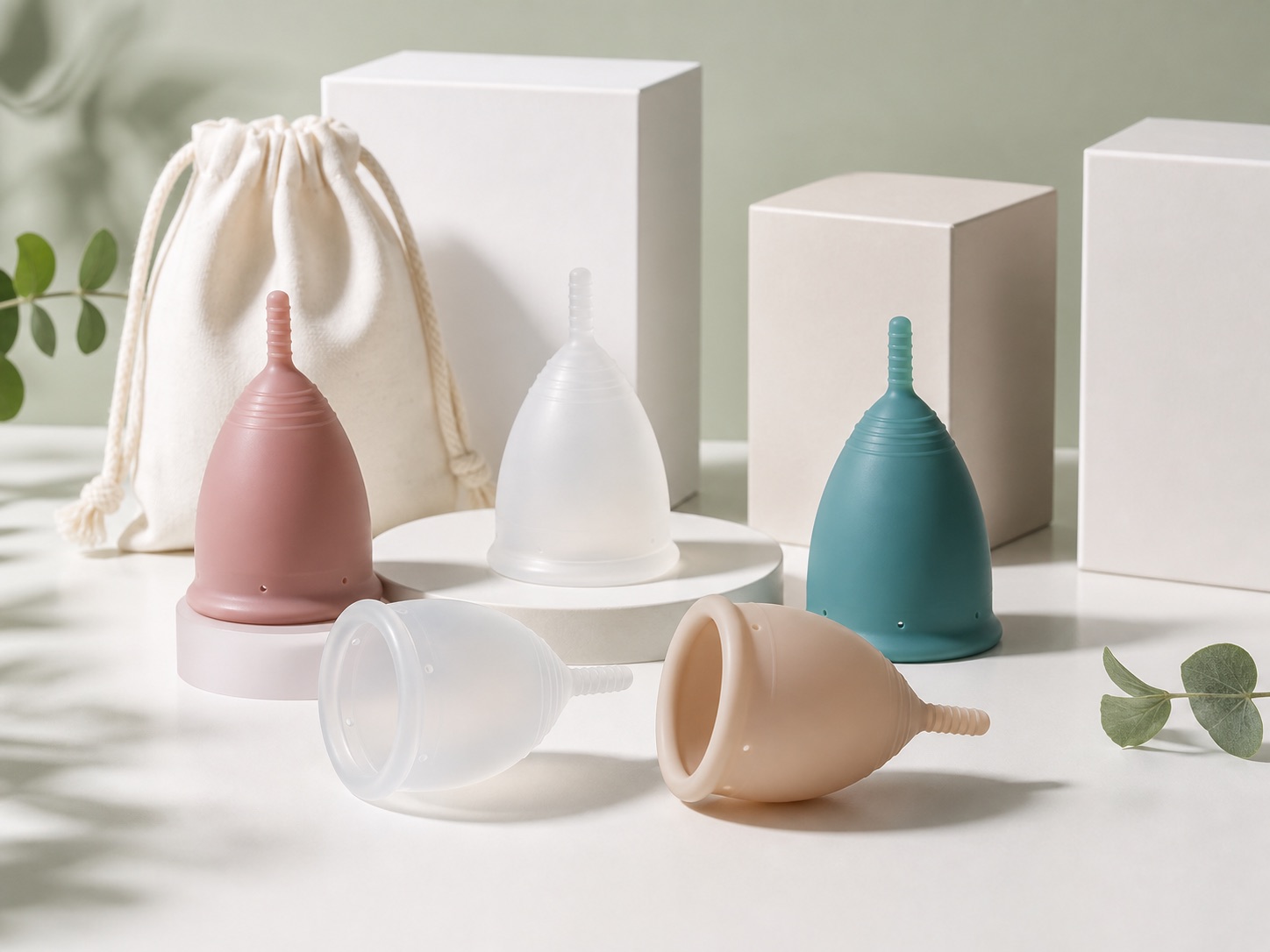
Procurement Overview
China's menstrual cup manufacturing landscape for buyers.
Buyers evaluating Chinese manufacturers should compare four dimensions: quoted material traceability and test scope, size and hardness control, packaging and any applicable sterilization route, and destination-market document responsibilities.
The manufacturers listed below represent different procurement profiles. No single factory fits every buyer. Use this comparison to identify which supplier matches your volume, market, and quality system requirements.
Official starting points: FDA registration and listing guidance and EU CE-marking guidance. Confirm the current product-specific route with the responsible regulatory parties.
Manufacturer profile 1: YUJI — fields to verify in the quote.
YUJI's public program references LSR silicone cup options, S/M/L sizing and capacity ranges, hardness directions, color and logo customization, plus pouch, box, and leaflet packaging. These are sourcing fields, not proof for a specific SKU. Confirm the final specification, sample, MOQ, process route, evidence availability, and approval status in writing.
Potential program fit: DTC brands, marketplace sellers, pharmacy pilots, and distributor catalog launches that need to evaluate product-specific documentation and QC requirements.
What to confirm in writing: Per-SKU MOQ, dated production plan, material, test, QC, packaging, and disc-program records remain project-specific until YUJI identifies the exact approved files.
Supplier archetype 2: High-volume silicone molding factory.
This archetype may suit a buyer with stable forecasts and in-house packaging or regulatory capability. Do not infer price, capacity, specialization, or document depth from factory size or location; verify the actual line, SKU, MOQ, changeover controls, and records in the quote and audit.
Best fit for: Established brands with high-volume forecasts who can manage packaging design in-house and need straightforward silicone molding at scale.
Procurement caution: Confirm the production areas used, material segregation and traceability, agreed QC methods, and whether any test report covers the quoted finished cup rather than a generic material or unrelated SKU.
Supplier archetype 3: Documentation-intensive contract manufacturer.
This archetype may suit a project whose classification and risk require more formal design, test, change-control, or submission support. Verify the certificate holder and scope, product-specific responsibilities, approved evidence, commercial minimums, and whether the proposed regulatory route actually applies.
Best fit for: Medical device distributors, regulated-market entrants requiring full biocompatibility files, and buyers who need sterilization validation records.
Procurement caution: Assess whether the CMO's minimum engagement level matches your forecast. Some CMOs require annual volume commitments that exceed first-year trial plans.
Side-by-side manufacturer comparison
| Decision factor | YUJI | Large-volume silicone factories | Medical device CMOs |
|---|---|---|---|
| Per-SKU MOQ | Request written quote | Request supplier-specific quote | Request supplier-specific quote |
| Quoted LSR specification and test scope | Request quoted specification and approved evidence | Verify by supplier and SKU | Verify by supplier and SKU |
| Size range flexibility | S/M/L with capacity data | Limited range | Custom development |
| Packaging support | Pouch, box, leaflet, kit | Minimal | Documentation-focused |
| Regulatory document depth | Determine product and market route | Determine product and market route | Determine product and market route |
| Project schedule | Confirm dated production plan | Confirm dated production slot | Confirm dated production slot |
How to choose the right manufacturer for your procurement stage.
- Define your volume tier. Share first-year forecasts, reorder expectations, and channel plans, then compare each supplier's written MOQ and production assumptions.
- Assess the legal route. Start with intended use, product classification, destination market, operator roles, and claims; then request only the documents that apply.
- Check packaging readiness. Factories with in-house packaging design reduce development cycles. Request packaging capability examples during supplier screening.
- Request QC records. Compare how each manufacturer documents dimensional checks, visual inspection, sterilization records, and batch release criteria.
- Verify communication flow. Record open RFQ questions, document status, owners, and response dates; early communication is useful evidence but not a production guarantee.
Start your manufacturer evaluation.
YUJI reviews buyer inquiries by project scope, market destination, and document requirements. Send your target market, preferred product format, volume forecast, and document needs for a comparable quote.