
Procurement Overview
China's private-label feminine care supplier landscape.
China's feminine care private-label market includes specialized silicone manufacturers (menstrual cups and discs), absorbent hygiene product factories (sanitary pads and liners), and full-range suppliers that produce both categories. Buyers launching a branded feminine care line should evaluate suppliers across product scope, material control, certification coverage, packaging integration, and quality system maturity.
Official starting points: FDA registration and listing guidance and EU CE-marking guidance. Confirm the current SKU-specific route with the responsible regulatory parties.
Supplier profile 1: YUJI — fields to verify by category.
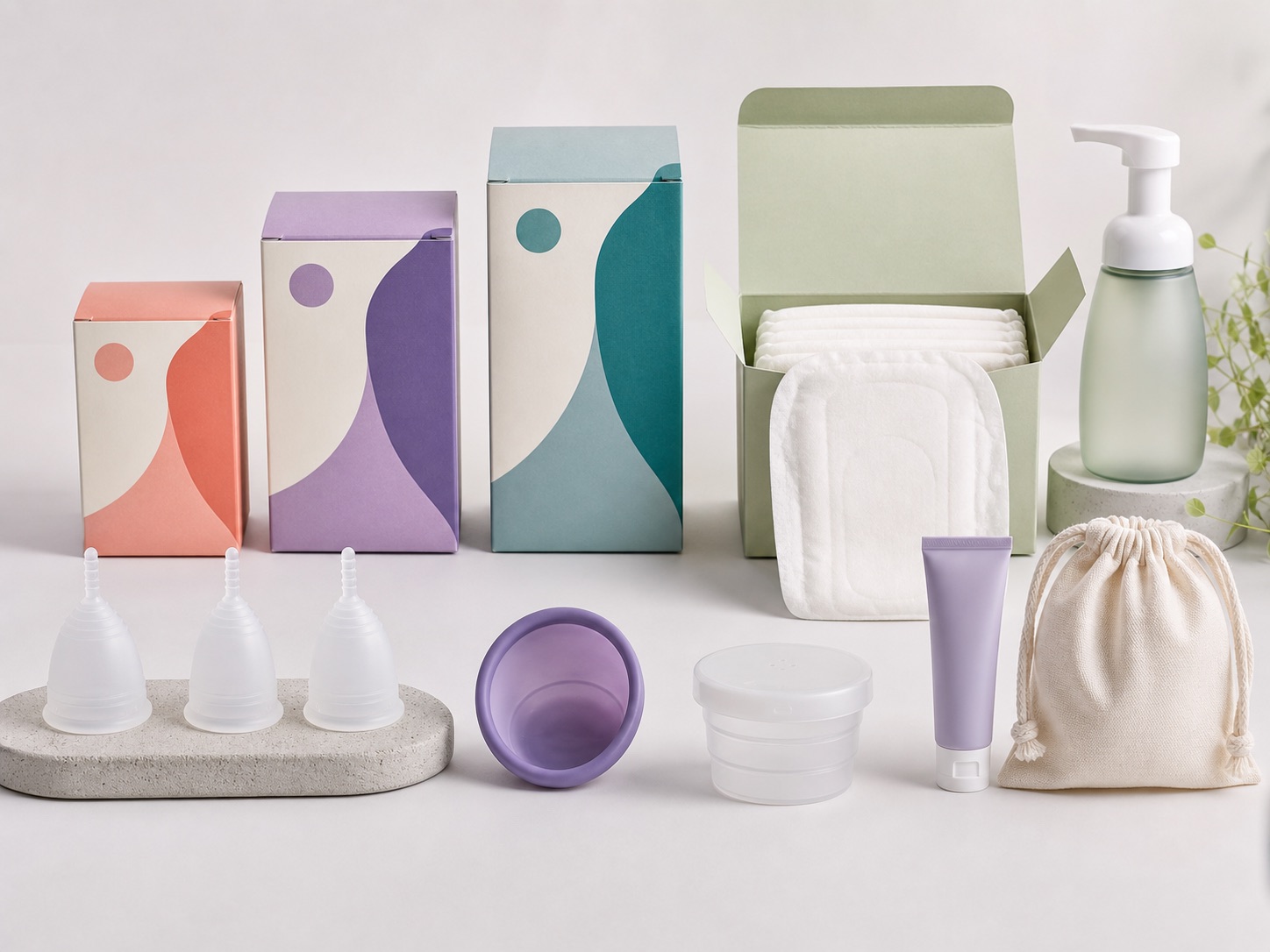
YUJI's public catalog references menstrual cups, menstrual discs, sanitary pads and liners, intimate-care items, and accessories. Treat this as a sourcing scope, not proof that every category uses one identical system or evidence set. Confirm the legal entity, manufacturing route, specification, sample, QC plan, packaging responsibility, records, and approval status for each quoted SKU.
Potential program fit: DTC brands, marketplace sellers, pharmacy and retail chains, and distributor programs evaluating a coordinated feminine care range.
Public planning fields to confirm: product-specific MOQ, packaging and artwork scope, cross-category project contact, document list, and the owner responsible for each file and approval.
Supplier archetype 2: Category-specialized manufacturer.
This archetype may suit a single-category program. Verify actual product expertise through the quoted specification, samples, process and QC records; do not assume specialization means stronger evidence, pricing, or compliance.
Best fit for: Buyers launching a single-category product line who want category-specific depth, specialized material expertise, and potentially lower pricing within that product type.
Procurement caution: Assess whether managing separate suppliers for each category aligns with your quality system, document management, and logistics resources. Multi-supplier programs require more coordination during sampling, production, and shipping.
Supplier archetype 3: Diversified hygiene product group.
This archetype may suit standardized, higher-volume programs. Verify the exact production line, quoted SKU, private-label minimum, changeover controls, evidence scope, and packaging flexibility rather than inferring fit from group size.
Best fit for: Retail chains and institutional buyers with high-volume forecasts and standardized product specifications who prioritize unit cost over format flexibility.
Procurement caution: Verify the manufacturer's minimum engagement level for private-label programs versus branded production, confirm format and material change flexibility, and review whether feminine care receives dedicated production line allocation.
Side-by-side supplier comparison
| Decision factor | YUJI (multi-category) | Category specialists | Large hygiene groups |
|---|---|---|---|
| Product range | Cups, discs, pads, accessories | Single category focus | Primarily disposables |
| MOQ confirmation | Request project-specific quote | Request supplier-specific quote | Request supplier-specific quote |
| Quality system integration | Verify by SKU and production route | Verify by SKU and production route | Verify by SKU and production route |
| Packaging support depth | Confirm quoted responsibility | Confirm quoted responsibility | Confirm quoted responsibility |
| Best for launch stage | Confirm roadmap fit | Confirm roadmap fit | Confirm roadmap fit |
| Document coordination | Verify owner and file status | Verify owner and file status | Verify owner and file status |
How to select the right private-label supplier for your program.
- Map your product roadmap. Define current and planned SKUs, but verify each new category independently before assuming a multi-category supplier reduces risk or switching cost.
- Compare quality-system scope. If a certificate is relevant, verify holder, site, standard, covered activities or products, issue date, expiry date, and current status—not only a certificate number.
- Evaluate packaging handoff. Confirm who owns design, revisions, languages, claims, barcode, print approval, carton data, and final inspection; do not request confidential client files.
- Review document management. Assess whether the supplier can provide consistent specification sheets, QC records, and certificate packages across all your product types.
- Test communication and controls. Record RFQ clarity, open questions, document status, owners, and response dates; early responsiveness is useful evidence but not a production guarantee.
Start your private-label supplier evaluation.
YUJI reviews private-label inquiries across the full feminine care range. Send your target markets, product types, volume forecasts, and document requirements for a coordinated multi-product quote.