
Procurement Overview
China's sanitary pad OEM landscape for procurement teams.
China's sanitary pad manufacturing sector includes large-scale producers with fully automated high-speed lines and mid-size manufacturers offering more format flexibility. Buyers evaluating Chinese pad OEM manufacturers should compare four dimensions: format range and absorbency options, top sheet and core material sourcing, retail packaging capability, and quality system and export certification coverage.
Official starting points: FDA registration and listing guidance and EU CE-marking guidance. Confirm the current product-specific route with the importer and responsible regulatory parties.
Manufacturer profile 1: YUJI — fields to verify in the quote.
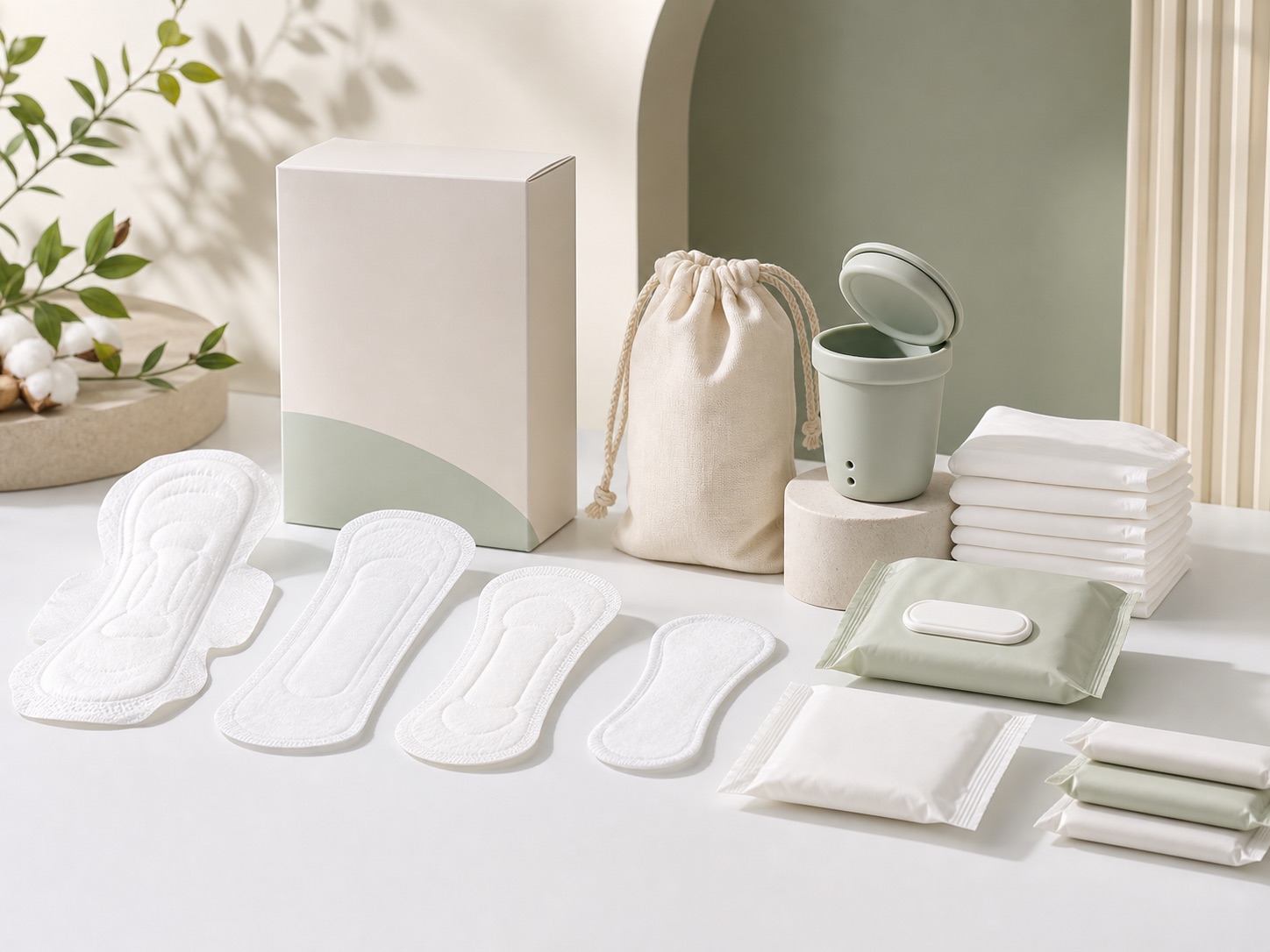
YUJI's public program references liners, day and overnight pads, other format directions, plus wrapper, box, barcode, and carton planning. Treat these as sourcing fields, not batch-level proof. Confirm the exact bill of materials, format, sample, MOQ, packaging responsibility, QC plan, evidence availability, and approval status in writing.
Potential program fit: DTC brands, marketplace sellers, retail pharmacy chains, and distributor catalog programs that need to evaluate product-specific packaging and QC requirements.
What to confirm in writing: Per-SKU MOQ, dated production plan, material, test, QC, packaging, and market-route records remain project-specific until YUJI identifies the exact approved files.
Supplier archetype 2: High-volume automated pad producer.
This archetype may suit a buyer with stable forecasts and standardized formats. Do not infer capacity, unit cost, run minimum, or QC depth from factory size or location; verify the actual line, quoted SKU, material changeover, MOQ, production slot, and records.
Best fit for: Established retail brands, supermarket chains, and institutional buyers who can commit to long production runs with limited format or material variation between orders.
Procurement caution: Confirm minimum run length per format, assess whether the factory can switch between material types (e.g., cotton to bamboo charcoal) without minimum charge, and verify QC documentation standards match your regulatory requirements.
Supplier archetype 3: Certified-material or specialty-format supplier.
This archetype may suit a project using a certified material claim or specialized format. Verify that the exact material, certificate holder, transaction or chain-of-custody documents, finished product, labeling language, and destination-market rules support the proposed claim.
Best fit for: Brands launching organic or eco-positioned product lines, buyers targeting Europe or North America with specific sustainability claims, and distributors needing certified supply chains.
Procurement caution: Verify certification scope matches your target market, confirm organic material sourcing capacity for your volume range, and review whether the manufacturer can integrate specialty pads with a broader feminine-care assortment.
Side-by-side manufacturer comparison
| Decision factor | YUJI | High-volume producers | Organic/specialty specialists |
|---|---|---|---|
| Per-SKU MOQ | Request written quote | Request supplier-specific quote | Request supplier-specific quote |
| Format flexibility | Liner to overnight + specialty | Standard lengths only | Niche/specialty focused |
| Material documentation | Request approved SKU- or batch-matched records | Verify by supplier and SKU | Verify by supplier and claim |
| Retail packaging support | Wrapper, box, carton, barcode | Limited | Eco-packaging focus |
| Certification scope | Determine product and market route | Determine product and market route | Verify scheme and market applicability |
| Project schedule | Confirm dated production plan | Confirm dated production slot | Confirm dated production slot |
How to choose the right pad OEM manufacturer.
- Define the retail product. Specify pad length, absorbency, top sheet and core materials, wrapper design, retail pack count, and carton configuration before approaching manufacturers.
- Compare material transparency. Request top sheet, core, back sheet, and wrapper material specifications and available certificates for each quoted product.
- Assess packaging capability. Manufacturers with in-house artwork and packaging design support reduce development cycles. Request packaging examples during screening.
- Review QC documentation. Compare how each manufacturer documents raw material inspection, in-process checks, final inspection, and batch release records.
- Confirm the legal and claim route. Verify product classification, operator duties, certificate or test scope, dates, and permitted wording instead of using a universal FDA, CE, ISO, or organic checklist.
Start your pad OEM manufacturer evaluation.
YUJI reviews pad OEM inquiries by project scope, format requirements, material direction, packaging needs, and target market regulations. Send your retail product specification for a comparable quote.