
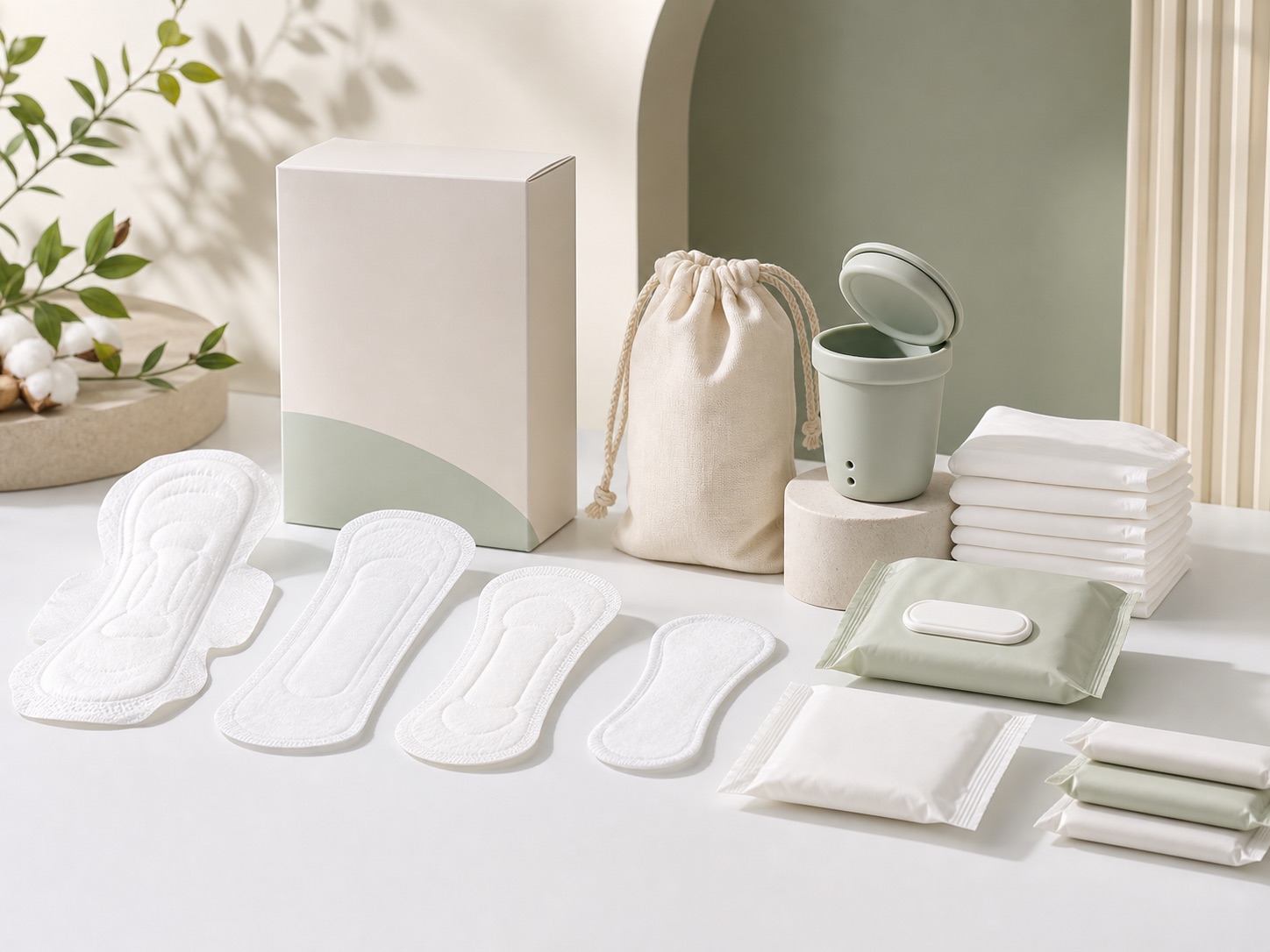
Procurement Process
Step 1: Define your product format and absorbency range.
Start by deciding which pad lengths and absorbency levels your brand will offer. Common launch categories include panty liners (140-160 mm, light absorbency), day pads (190-240 mm, moderate absorbency), and overnight pads (280-420 mm, high absorbency). Maternity pads and post-surgery pads serve specific market segments. Most brands launch with 2-3 core lengths to test channel response, then expand based on sell-through data.
Procurement discussion point: Ask your OEM partner which formats they produce most frequently in your target market. Volume-optimized formats often have better pricing and shorter lead times.
Step 2: Select top sheet, core, and back sheet materials.
Material selection determines retail positioning and cost structure. Top sheet options include cotton (comfort positioning), organic cotton (premium/sustainable), bamboo charcoal (odor-control claims), and synthetic non-woven (value tier). Absorbent core options include superabsorbent polymer (SAP), wood fluff pulp, or blended constructions. Back sheet choices include breathable PE film or non-woven fabric.
Procurement discussion point: Request material specification sheets for each component and confirm traceability from the OEM's suppliers. Ask about minimum material order quantities and lead time differences between material tiers.
Step 3: Plan your MOQ and phasing strategy.
Confirm a written per-SKU MOQ after format, retail pack, wrapper, material, and customization are defined. Plan first-order quantities per SKU and retail pack count. A phased launch can reduce initial inventory risk and allow demand validation.
Procurement discussion point: Ask whether the OEM offers combined MOQ across multiple SKUs or reduced MOQ for repeat orders of the same format.
Step 4: Design packaging — wrapper, box, carton, and barcode.
Retail packaging includes individual wrapper design (sealed, folded, or perforated), retail box or pouch configuration, carton pack quantity, and barcode assignment. Specify packaging language, any required warning or importer text, and sustainability preferences (recyclable or biodegradable materials). Packaging artwork typically requires 1-2 revision rounds — factor this into your launch timeline.
Procurement discussion point: Confirm the OEM's artwork specification format (AI, PDF, or layered files), the number of revision rounds included in the quoted price, and the lead time impact of custom packaging versus standard options.
Step 5: Request samples and evaluate against specifications.
Request pre-production samples for each format and verify pad length, absorbency performance, material layering alignment, wrapper seal quality, box or pouch fit, and overall print quality. Compare every sample against your written specification sheet. Document all approvals in writing before authorizing mass production.
Procurement discussion point: Ask about sample lead time, whether sample cost is deductible from the first production order, and how the OEM handles specification revisions during the sampling phase.
Step 6: Confirm quality documentation and certificate readiness.
Request component specifications for the top sheet, core, back sheet, adhesive, and wrapper, then identify the exact finished-product or material tests required for the intended use and destination market. For every certificate or report, verify the holder, issuing body or laboratory, scope, issue and expiry dates, tested sample, method, result, and whether the file is approved for your use.
Regulatory boundary: In the United States, determine the applicable product code, class, establishment or device-listing duties, and any exemption limitations; registration or listing does not mean FDA approval. In the European Union, use CE marking only when legislation covering the product specifically requires it. Review the FDA registration guidance and EU CE guidance, then confirm the route with the importer and qualified regulatory counsel.
Step 7: Plan logistics — carton, shipping, and market entry.
Confirm carton dimensions and pack quantity, carton labeling and marking requirements, and Incoterm agreement with your OEM. Coordinate with your freight forwarder on shipping timelines, required customs documentation, and destination market import requirements such as labeling language, ingredient declarations, and product registration procedures.
Private-label pad brand launch checklist
Copy this pre-order RFQ brief
Use these fields to make a supplier quotation comparable. Each line should be confirmed against the quoted SKU and target market rather than assumed from a generic guide.
| RFQ field | Buyer input | Confirm in writing |
|---|---|---|
| Product and market | Product category, target country, channel, intended use, and proposed market-facing claims | Applicable product route, operator responsibilities, label language, and claim review scope |
| Format and specification | Pad or liner format, desired performance direction, material-stack direction, count per pack, and target SKU mix | Quoted specification revision, sample plan, any agreed test method, and final acceptance criteria |
| Packaging | Wrapper, retail box or pouch, leaflet, barcode, carton marks, languages, and artwork status | Packaging bill of materials, approval owner, artwork process, and carton data |
| Documents | Requested material, test, QC, certificate-scope, and packaging records | Availability, product and entity scope, dates, redaction needs, and permitted use |
| Order and delivery | Sample quantity, first-order forecast, reorder plan, inspection needs, delivery address, and launch window | Project-specific MOQ, production plan, inspection handoff, and shipping responsibilities |
Start with the pad and liner specifications, then review the OEM development process before sending the completed brief through the RFQ form.
Launch your pad brand with YUJI.
YUJI supports private-label sanitary pad brand launches with transparent material sourcing, flexible format and packaging options, responsive sampling, and clear QC documentation. Send your retail product specification and target markets for a comparable quotation and launch timeline.